Showing posts with label teaching English in Colombia. Show all posts

Friday, January 16, 2009

Why Experience Trumps Pieces of Paper - Reader Comments

Reader Comments Based on the Article Post "Are Some Certifications Overrated?"

Blogger Ms. Lucy said...

Great post. One of my duties as a language consultant and ESL/EAL specialist is hiring new teachers. You wouldn't believe the number of PhD applicants that come my way. That being said, thank goodness that's not all I base qualifications on- because frankly, I've hired fewer than I can even remember (and I've been doing this a long time). To teach, you either have it - or you don't. Personally, talent, skills and personality is what I look for in a good teacher. It doesn't matter how many degrees you have; if you can't interest and motivate...forget about it. Thanks for this very interesting post.

Posted by Ms. Lucy


Blogger Eric H. Roth said...

"Excellent primer on why experience trumps pieces of paper, but in the classroom!

Let me explain. Many educational institutions, especially in some places, remain paper-driven. Let me give a sad example. I currently teach English at an elite private university, but I couldn't get a teaching job in a California public school teaching English because I lack the right MA.

Expertise and experience, for many educational institutions, remain of limited use. Former President Clinton could not teach government, history, or social studies in California public schools. Academy Award winning actors can not teach theater in the schools. World class musicians can't teach music. It's utterly absurd.

"We learn to walk by stumbling", goes the Bulgarian proverb. Teachers, and students, learn by doing and making good mistakes. You nailed the problem with reading 500 books to become a recognized expert instead of just throwing yourself in and gaining experience.

The best teachers are often autotelic (self-directed), and share their passion for learning and model love of knowledge. Adding a PhD after your name doesn't magically translate into you a dynamic, quality English teacher.

As Ms.Lucy notes, "you either have it - or you don't."

Thursday, December 04, 2008

“What am I Going to Do If the Boat Sinks?”


An Exciting Vacation on the Pacific Coast of Colombia

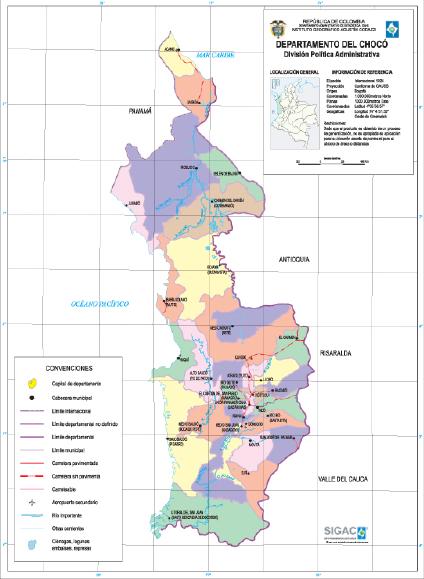
A month ago my 87-year-old Mother Praxedes decided she wanted to return to her home town, a small fishing village called Jurubida, located on the Pacific Coast of the Choco region of Colombia. *The Choco is listed in the Guinness Book of Records as the “wettest region in the world” with more than 40 FEET of rainfall per year. In order to get there we took a flight from the south central mountain valley city of Cali where I live to the northern city of Medellin mere hours from the border of Panama, and from there another flight by small plane to the county seat town of Nuqui on the Pacific coast. Satena Airlines provided a wheel chair for my Mother, due to her age and the fact that she is not able to walk very well.

The 600-plus population fishing village of Jurubida is one hour away from Nuqui by outboard boat. After arriving in Nuqui we took a small wooden launch to Jurubida. One of our neighbors, a man nick-named “Feo”, from the village piloted the launch. We did not have life vests or any safety equipment. At about the half way point of the passage, heavy rains started and we had strong winds and big waves buffeting our tiny craft. In the middle of the storm the outboard motor failed. Feo worked frantically to bail water and get the motor started. Now we were in the ocean trying to bail the water out from the boat to keep us from sinking. We were cold, wet and praying for our lives.

“What am I going to do if the boat sinks”, a Mother asked me. “My daughter can’t swim at all.” The look in her eyes spoke volumes of the terror she felt.

Trying to comfort her I responded, “If that happens, the best thing to do is to hold on to the boat after it turns over.”

I gazed over towards the shore, at least a couple of kilometers distant. I’d try to swim for it if it came to the worst and the sea calmed down some. Both Nuqui and Jurubida were on the coast a mere four to five kilometers or so apart. You could easily see the lights of Nuqui from the beach of Jurubida at night. The launches essentially paralleled the beach a mile or two offshore for most of the trip. You can even walk from the one to the other with the exception of having to cross two rivers emptying into the sea. One river, the Tribuga, is very broad and deep enough to allow even large ocean-going ships to enter its mouth.

Finally the storm ceased, the motor started, we continued and arrived safely.

After being in Jurubida for about three days, the rumors began. The guerrilla were coming that night to kill everybody in town. At 6 pm not one soul was on the street, everybody was locked in their house praying. The few young, inexperienced soldiers who were in town were very nervous. Then they started running around shouting and clapping*, when we heard that noise we thought the shooting had started so my Mother, cousins, nephew and nieces all hid under our beds. Thank God nothing happened that night.

*Note: This is a military tactic designed to disguise the number of combatants. By moving around and clapping, the constant changing of position, sound echoes and reverberations make it nearly impossible to determine the number of soldiers there are.

The very next day I took a boat back to Nuqui trying to catch a cargo boat south to Colombia’s largest Pacific coast seaport city, Buenaventura, because I was already out of money. My Mother stayed in Jurubida. When my relatives in Nuqui found out about my travel plans, they warned my not to take the cargo boat “Luchador” because my life could be in danger since the cargo boat was under threat by extortionists and the guerrilla. It is one of only two cargo boats that regularly make the trip up and down that section of Colombia’s coast. I called my husband and waited until he wired me the money to fly back to Cali. It had been the most “exciting” vacation I have ever had. Still, even though I was now back home, it wasn’t over. Within a couple of days I knew I had contracted “parasites” from the food and water I consumed during my “exciting vacation”. Three days treatment with Zentel and Secnidol and my ordeal was finally ended.

Thank Jehovah God.

Acknowledgement

This story is as was told to me by Doris Lopez in November 2008. I have been to Nuqui and Jurubida several times myself, traveling both by air and cargo boat. The fishing village of Jurubida is accessible only by sea by small motor launch. Nuqui has an airport which handles small passenger aircraft only, during daylight hours. The week following this story, a plane crash occurred there which killed nine of the approximately dozen or so people aboard.


Prof. Larry M. Lynch is an EFL Teacher Trainer, Intellectual Development Specialist, author and speaker. He has written ESP, foreign language learning, English language teaching texts and hundreds of articles used in more than 125 countries worldwide. Get your FREE, pdf format report on CD or via e-mail, "Creative, Dynamic Ways to Motivate and Teach English as a Foreign Language to Diverse Groups of Reluctant Learners" by requesting the title at: lynchlarrym@gmail.com


Tuesday, October 28, 2008

Thinking of Teaching in Colombia? Then Read This


If You Want to Teach English in Colombia

You should start distributing your CV NOW for work next semester or at least to garner a few initial interviews when you arrive here. Meanwhile, polish up that CV and assemble your diplomas, academic publications and production, certificates of technical conference presentations and attendance, etc. to have them ready as well.

Work VISA and Immigration Requirements

You’ll also need to bone up on immigration and work visa requirements for foreigners in Colombia. Since my wife is Colombian I took a different route than most of you obviously will need to.

Police records from the USA and your state of residence are also a requirement, I'm pretty sure. From a foreign country you'll need a police document called a "Paz y Salvo" or something similar. The local police or immigration office should know what you'll need too. I'd check with them right away for a document which essentially says you have no criminal record or legal proceedings against you in that country. You could also check with Colombian immigration at the Colombian Embassy but I can't say how helpful they're going to be. It just depends on where you presently live.

"Book'em Danno"

The FBI provides criminal records checks for citizens transferring residence abroad. If you're already living and working abroad, someone from home can inquire about necessary procedures on your behalf at any FBI branch or field office. The local police in the town where you lived might be able to help too. When I lived in Allentown, PA I went to the Central Police HQ and told them what I needed. They contacted the local FBI field office, which happened to be only a couple of blocks away and referred my case to them. The local police fingerprinted me right then and there - along with the current crop of "undesirables" who had just been brought in, but the officer attending to my case made sure to tell everybody repeated that I wasn't being "booked" and that I was a special non-criminal case. Then, everybody, including the others being booked then, had a surprisingly different attitude towards me. Much to my relief, I might add.

I then took my fingerprint card to the FBI field office - up until then I didn't even know that there even was an FBI field office in town. The agents were very nice about explaining the procedures to me, until I told them I was going to Colombia that is. While this noticeably altered their behavior, still I wasn't charged with anything, had no criminal record and was there on my own and not under arrest so they quickly "mellowed out" and helped me along.

The FBI

To "speed things up" even more, I drove down to the FBI HQ in Washington, DC, (shown above) with the police records I had so far, and everything was finished the same day. These procedures were nothing new to them as diplomats, high-level businessmen and administrators all apparently need to do the same thing at some point.

With criminal records clearance from the PA State Police, the local city of Allentown Police and the FBI, I had no problems with emigrating to Colombia and securing lucrative work. In Colombia, your diplomas are key to determining what kind of work - teaching, for example, that you'll "officially" be allowed to do. Other than that, a very healthy dose of patience is all you'll need from then on.

I hope this helps to get you started. Let me know if you have any further questions.

In an additional post I'll comment on what then happens once you get to Colombia. That's really where the "fun" begins.

See you then.


Prof. Larry M. Lynch is an EFL Teacher Trainer, Intellectual Development Specialist, author and speaker. He has written ESP, foreign language learning, English language teaching texts and hundreds of articles used in more than 125 countries worldwide. Get your FREE, pdf format report on CD or via e-mail, "Creative, Dynamic Ways to Motivate and Teach English as a Foreign Language to Diverse Groups of Reluctant Learners" by requesting the title at: lynchlarrym@gmail.com


Saturday, September 27, 2008

Teaching English in Colombia Frequently Asked Questions


Teaching English as a Foreign Language in Colombia

The following comprise some of the most frequently asked questions I receive on teaching English in Colombia. While not a complete listing, the responses do provide some brief insight into EFL possibilities here. I have lived and taught in Colombia since 1995 and am currently teaching at the Santiago de Cali University in Cali pictured here.

Q: Do you have a list of EFL schools in Colombia or know where I may find one?

A: You will find some helpful information for teaching English in Colombia in an online article published by Transitions Abroad magazine at:

http://www.transitionsabroad.com/publications/magazine/0205/teachcolumbia.shtml

Q: I am particularly interested in spending time in Cartagena. I wonder if you might be able to advise me or point me in the right direction?

A: In Cartagena you can contact any schools there directly when you arrive since it's a relatively small city based solely on some tourism. Unemployment is very high there unfortunately. You should contact regular primary and secondary schools as well.

Q: I'm beginning to get the impression that perhaps Cartagena may not hold many opportunities. Does your comment about unemployment being high there imply that there's not much call for English teachers (to adults) in the town? I'm not being very successful searching for adult educational establishments in Cartagena.

A: With nearly 80 per cent unemployment, Cartagena might not be right for you. Beggars, thieves, con artists and a massive army of poor constantly surround you. You certainly can't go to the beach that the city is famous for because there they know you're a "tourist" with disposable dollars and you'll be absolutely miserable after the first 500 or so beggars have beseiged you in less than a couple of hours. Not much of a vacation spot now, I'm afraid. Sorry.

Q: I understand you have written a series of articles about teaching English in Colombia, could you point me in the right direction?

A: Your best opportunities will be in Bogota, the capitol, with more than 75 schools, universities and institutes from which to choose. Cali has about forty such options. If you'd like to be on the coast, you might try Barranquilla. The language institute at the university there is hiring EFL teachers on a continual basis and is online. It's the Universidad del Norte site in English is at:

http://www.uninorte.edu.co/english/int_relations.html

Q: What is the best time of year to go to look for work in Colombia?

A: As far as looking for work is concerned; July to August you should be pounding the pavement. The next best time frame is in early to mid January. Another critical period for job-hunting is May to June. Most importantly, choose where you want to live and work, or make a pilot trip to uncover essential facts, leads and information on a couple of cities.

Q: How much money do you think I should have before I travel to Colombia?
A: Try to have enough money to tide you over at least three months of savings to give you some breathing room, but even one month of savings might be enough if you find something fairly quickly. Just look at the exchange rate of U.S. dollars to Colombian pesos. Factor in the cost of living per month and you’ll likely find an approximate amount of savings that are necessary. You can compile a more accurate figure by checking out www.tefl.com for their Bogota city cost guide.

Q: Is there anything else you might suggest to me as a newly certified EFL / ESL teacher?

A: After a bit of tenure in Colombia you'll have other options, especially if your Spanish is passable. Also consider Spain, Mexico (my favorite), Ecuador, Chile and other Spanish-speaking countries. If you're not set on one of those, Turkey, Indonesia and China, along with other Asian countries pay very well and offer good opportunity for newbie native English speaking EFL teachers.

Q: Are your other articles available to read online?
A: Let me know what you have in mind and I might be able to offer some more specific suggestions. For even more information and readings, you might want to check out my articles online at EzineArticles.com cataloged at:

http://EzineArticles.com/?expert=Larry_M._Lynch

These should keep you interested, busy and informed for a while. Let me know if I can be of any further assistance.

Good luck.


Prof. Larry M. Lynch is an EFL Teacher Trainer, Intellectual Development Specialist, prolific writer, author and public speaker. He has written ESP, foreign language learning, English language teaching texts and hundreds of articles used in more than 100 countries. Get your FREE E-book, "If you Want to Teach English Abroad, Here's What You Need to Know" by requesting the title at: lynchlarrym@gmail.com Need a blogger or copywriter to promote your school, institution, service or business or an experienced writer and vibrant SEO content for your website, blog or newsletter? Then E-mail me for further information.


Wednesday, September 03, 2008

How the Bejing China Olympics Impact My EFL Learners


Olympic Medals in Colombia

By the way, did you watch any of the Past month’s Bejing, China Olympic events? I did and so did the vast majority of my English as a Foreign Language learners. They paid special attention, as did most Colombians, to the silver medal in weightlifting won by Diego Fernando Salazar and the bronze medal in women’s wrestling won by Jackeline Renteria (pictured in red). Colombia’s only gold medal ever was won in Sydney in 2000 in women’s weightlifting by Maria Isabel Urrutia who is now a congresswoman and sports advocate. Doubtless your learners would talk enthusiastically about the medals and events in which your particular country fared well, or not, as the case may be.

Which Olympic events did you get to watch? Although I didn’t get to see much of the games and events, I did get opportunities to briefly check out men’s and women’s beach volleyball seeing both win the gold for the USA. I caught Baltimore's Michael Phelps swimming to three of his eight gold medals. (I grew up in Baltimore) The javelin throw, women’s high jump and pole vaulting also got brief coverage views from me. The events which most interested me I completely missed due to lack of local coverage here in Colombia or the time at which the events were aired locally. What about you? Did you get to see most of what you wanted to?

What are Your Favorite Olympic Events?

What are your and your learners’ favorite Olympic sporting events? Why not list and describe them, especially if they’re not too “mainstream events where you happen to live and teach? My EFL learners haven’t a clue about most winter and ice or snow-based events, since there’s virtually no snow in Colombia. The events gave ample opportunity to delve into lesser-know or less popular sporting events yet raising learner awareness of what’s practiced and popular – besides soccer – in other countries. Actually myself, I like baseball, basketball, gymnastics and ballroom dancing (but that’s not an Olympic event, yet). Are there any particular sports that you don’t like? Most of my EFL learners said Golf, but that’s hardly a surprise here. The sport is developing to a degree since there are several up and coming Colombian golfers on the international circuit.

Sorely Missed Olympic Events

Some sorely-missed Olympic events included men’s basketball - I didn’t get to see a single game! Fencing, wrestling, most of the prime track and field events – I didn’t see the men’s and women’s relay teams fiasco that made front page sports news even here. Archery, diving and the classic Olympic marathon also escaped me, unfortunately.

Why do you think that Olympics coverage doesn’t feature most flashbacks and interviews with previous record holders and former greats still living but retired or no longer competing? What ever happened to Mark Spitz and Carl Lewis, among many others? Did they do that and I missed it because there was no coverage of that here?

Get Your EFL Learners Involved

Have your EFL or foreign language learners research facts, records and statistics. Allow them to report biographies and sporting event details or even demonstrations. Detail events and describe sporting events with which many of your earners may be unfamiliar. Have them explain why they think China won so many gold medals, little Jamaica won 11 medals but Venezuela, Ecuador and Panama only one medal each while other countries may not have won any at all. Have them talk about your country’s performance and how it might be improved or changed. You can and should use any sporting or cultural event to stimulate English language learning among your students, giving them spontaneous discourse outlets for extemporaneous speech. That’s one of the many ways the Bejing, China Olympics impacted my English as a foreign language learners during this semester.

How about yours?


Prof. Larry M. Lynch is an EFL Teacher Trainer, Intellectual Development Specialist, prolific writer, author and public speaker. He has written ESP, foreign language learning, English language teaching texts and hundreds of articles used in more than 100 countries. Get your FREE E-book, "If you Want to Teach English Abroad, Here's What You Need to Know" by requesting the title at: lynchlarrym@gmail.com Need a blogger or copywriter to promote your school, institution, service or business or an experienced writer and vibrant SEO content for your website, blog or newsletter? Then E-mail me for further information.


Wednesday, August 27, 2008

Part 2 More Critical Points in English Language and Foreign Language Testing and Evaluation


Testing, Evaluation and Assessment in EFL and Foreign Language Classes
We’ll continue to look at some critical points which need to be considered along with the English as a foreign or second language testing, evaluation and assessment processes. Generally, similar conditions and aspects apply to the teaching and learning of other foreign languages as well. So, we’ll discuss some additional points here in the second part of this two-part article post.

4. Allow a Sufficient Amount of Time

As an English as a foreign language or other foreign language teacher, have you ever taken the time to sit down and actually DO one of your own exams? If not, how do you determine the length of time required to complete an exam? Of course, your EFL learners likely will take much longer than you will to complete an exam, but you do need at least some benchmark to establish time parameters. Say double or triple your time of completion for your foreign language learners and you’ll be somewhere in the ball park.

5. Explain Exam and Test-taking Parameters Clearly

“Oh, my English language learners know what to do”, you say? Tell them the rules anyway. Watch their faces. When you see the “lights go on” in some of their faces you’ll realize the need for this. This also aids you in “putting your foot down” when something goes awry. You can then say with authority, “I told you about that before the exam”. If the language class must turn off cellular phones, MP3, MP4, iPod or other electronic devices, refrain from going into purses, bags, or abide by other specific regulations, be sure they know in advance of the test-taking period and again immediately before the exam begins. This has saved my bacon moirĂ© than once over the years, and it will yours too, when done regularly.

6. ENFORCE Your Parameters and Test-taking Regulations or Parameters

You’d think that your English as a foreign language learners would then blithely adhere to your correct parameters when taking tests, evaluations or assessments of their foreign language knowledge and communicative skills. Oh, but if that only were true. Unfortunately, you know and I know that there will always be the “jokers”, the “Clowns”, the inept and the ever-present “unmotivated”, “disinterested” or “unprepared” who will seemingly do their absolute utmost to deride even your best efforts. Fore-warned is almost always fore-armed.

Your Feedback is Encouraged

As always, your feedback, questions, comments, insights and suggestions are encouraged. What works – or doesn’t, for you and your English as a foreign language learners, along with any interesting experiences you might have can be posted.


Prof. Larry M. Lynch is an EFL Teacher Trainer, Intellectual Development Specialist, prolific writer, author and public speaker. He has written ESP, foreign language learning, English language teaching texts and hundreds of articles used in more than 100 countries. Get your FREE E-book, "If you Want to Teach English Abroad, Here's What You Need to Know" by requesting the title at: lynchlarrym@gmail.com Need a blogger or copywriter to promote your school, institution, service or business or an experienced writer and vibrant SEO content for your website, blog or newsletter? Then E-mail me for further information.


Tuesday, August 26, 2008

Three Critical Points in English Language and Foreign Language Testing and Evaluation


Testing Evaluation and Assessment in EFL

“No teacher, why do we have to take exams?” Do you get this question as I often do? While there are a multitude of possible answers, nevertheless we must, in regular intervals, evaluate or test our groups of English as a foreign language learners, in addition to learners of other foreign languages as well. But before running off half-baked to twist and squeeze the wearied brains of our charges, let’s take just a moment to look at some critical points which need to be considered along with the testing, evaluation and assessment processes. We’ll discuss the first three points here in part one of this two-part article post.

1. Test ONLY Material Which Has Been Actually Taught

It quite common that exams are regularly pre-scheduled into the English or other foreign language curriculum, but hold on there Hoss, `cause there can be a few monkey wrenches thrown into the works that need to be accounted for at times. You know, those pesky little things like holidays, strikes, administrative outages, lost days due to environmental and other factors. For example, we have earthquakes in Colombia. There are also periods of heavy rains and accompanying floods. Then there are those “annoying” power and water outages that wreak havoc on virtually any society no matter how “developed” or “under-developed” they might be. “So what”, you say? Well these and numerous other factors can "skew" your teaching days and schedule so that when test time rolls around, you haven’t actually taught everything covered on a pre-scheduled exam. If that happens, then you shouldn’t test what you haven’t taught.

2. Use Multi-Modal Testing Approaches

Global reference testing (IELTS, TOEFL, etc.) aside, your EFL learners shouldn’t be subjected to a battery of only “answer the question” or “multiple choice” questions for the entire exam. Many highly successful people like Albert Einstein, did poorly in school and on exams for this and similar reasons. You don’t always use the same method in your teaching now (gasp!), do you? Well then don’t do it when you test either.

3. Use Known and Practiced Exercise Types

As a Department Head, Language Programs Coordinator and Teacher Trainer, I’ve constantly “preached” the necessity of using only exercise types on exams with which the learners have been made familiar. This serves several constructive purposes such as eliminating the need for an ongoing string of “Teacher, I don’t understand how to do section C" questions and the resulting repeated, lengthy, exam time-consuming responses. Use an extensive variety of exercise types during your English or foreign language classes and you can use more of these same types of exercises on exams without generating questions or problems.

In Part Two – More Critical Points English and Foreign Language Testing Will Be Discussed

We’ll continue to look at some critical points which need to be considered along with the testing, evaluation and assessment processes in part two of this two-part article post. See you then.


Prof. Larry M. Lynch is an EFL Teacher Trainer, Intellectual Development Specialist, prolific writer, author and public speaker. He has written ESP, foreign language learning, English language teaching texts and hundreds of articles used in more than 100 countries. Get your FREE E-book, "If you Want to Teach English Abroad, Here's What You Need to Know" by requesting the title at: lynchlarrym@gmail.com Need a blogger or copywriter to promote your school, institution, service or business or an experienced writer and vibrant SEO content for your website, blog or newsletter? Then E-mail me for further information.


Sunday, August 10, 2008

Teaching the Difference Between MAKE and DO


Distinguishing the Differences Between “Make” and “Do”

English as a Foreign Language learners like those whose first language, L1, is Spanish can have considerable difficulty in distinguishing when to use “make” and when to use “do”. Why? It’s because in Spanish, for example, the same verb, “hacer”, is commonly used to represent both. The trick then, is to find a way of aiding these English language learners with making the distinction.

Here’s how I do it.

Make

Essentially “make” means to “create” or cause something to happen or produce a result. You make a cake, make noise, make trouble or make friends.


Do

On the other hand, “do” usually signifies simply performing an action without alluding to the results. So you do aerobics or exercises, do business or do your job. You can do well or do badly, do better or do worse.

Other Uses of Make and Do

Depending on context, both make and do can be used in a sentence to give it different meanings. A good example is homework. Teachers make homework and exams, but learners do homework or take exams ("do" is less commonly used here.

The two verbs form a part of scores of idioms and expressions too. This can sometimes cause their distinction to be less clear, but usually the definitions given above still hold true. Some additional examples using “Do” and “Make” are:

DO

Do a dance, do a deal, do as you’re told, do away with, do chores, do favors, do harm, do it yourself, do (it or something) over again, do someone in, do the dishes, do the laundry, do the right thing, do time, do well, do without, do your best, do your duty

MAKE

Make a contract, make a delivery, make a difference, make a list, make a mess, make a phone call, make a point, make a profit, make a promise, make amends, make an effort, make believe, make contact, make enemies, make fun of someone, make love, make money, make news, make out, make over (very similar in context to do over), make peace, make room, make sense, make someone happy, make someone laugh, make someone sad, make sure, make the bed, make time, make room, make tracks, make up (has multiple meanings), make up a story (same as create a story), make up your mind, make war, and make way

This is but a quick reference list to give you some idea of the range and distinction that using “do” and “make” can have in the colloquial English language. For the most part, after a session expaining and demonstrating these language elements in context, my learners have far fewer problems in distinguishing when to use “make” and when to use “do”. I hope that this helps you and your EFL learners too.

Prof. Larry M. Lynch is an EFL Teacher Trainer, Intellectual Development Specialist, prolific writer, author and public speaker. He has written ESP, foreign language learning, English language teaching texts and hundreds of articles used in more than 100 countries. Get your FREE E-book, "If you Want to Teach English Abroad, Here's What You Need to Know" by requesting the title at: lynchlarrym@gmail.com Need a blogger or copywriter to promote your school, institution, service or business or an experienced writer and vibrant SEO content for your website, blog or newsletter? Then E-mail me for further information.


Saturday, July 26, 2008

Part 2 - Professional English Teachers Desperately Needed


More Stories From TEFL Administrators
We continue here with more "horror stories" from ravaged TEFL administrators. And you thought only English teachers had "problems"? Just take a look at this.

Dress Codes? What Dress Codes?
Dress codes, resumes, punctuality and attendance; does this sum up the apparent worst of the infractions? No, my friends, it doesn’t. We haven’t dipped into the actual interview itself yet. At one point a hiring manager at Lingua Cultura Institute in Mexico City had me laughing out loud at some of the “antics” that she’d experienced during English teacher interviews. “One applicant actually asked me not to schedule her for any classes on Mondays or Fridays because she needed those days to make a for-day weekend each week for her partying.” She didn’t get the job at this prestigious, well-paying institute. Now she can party forever.

Strange Requests
Applicants have made strange requests as pact of their employment prospects. “Can I bring my dog to class?, cuz’ I can’t get anyone to watch him during the time I’m not home. He’s very destructive, you see.” What do YOU think the interviewer said? Professor Stephen Bradbury told me, “I did know an English teacher who took his Bassett Hound to class. The dog slept on the floor at the front of the class while the teacher was lecturing.” That situation endured for quite some time although you may wish to note, that the “dog lover” no longer works as an English teacher. Word gets around. Requests for “special favors”, illicit “loans” or payment for un-worked time are unprofessional and out-of-place. In a word, “Don’t do it.”, advises Chloe Conway de Pacheco of the Centro de Idiomas Del Sureste, one of Merida’s largest language schools.

Be Professional
If you’re going to work in Mexico (or any where else for that matter), be a professional. Let’s prepare well for interviews. Even though you’re a native speaker of English, “Be prepared to take an English evaluation”, warns interviewer Mario Robles Luengas at Hamer – Sharp in Mexico City’s Zona Rosa. Be sure to roof-read resumes and cover letters. Let’s maintain an acceptable attendance record on our jobs, dress for success, and avoid proliferation of the “ugly American” stereotype in any way to our south-of-the-border neighbors and employers. To assist in providing aspects of proper protocol in business and some personal matters while in Mexico, timely short features on working in Mexico will address topics of interest to us all. Some will be news. Others will be reminders. All should be useful.

Be sure to check out “An Interview with Prof. Larry M. Lynch” online at:
http://www.e1-network.com/professor_larry_lynch.html


Prof. Larry M. Lynch is an EFL Teacher Trainer, Intellectual Development Specialist, prolific writer, author and public speaker. He has written ESP, foreign language learning, English language teaching texts and hundreds of articles used in more than 120 countries. Get your FREE E-book, "If you Want to Teach English Abroad, Here's What You Need to Know" by requesting the title at: lynchlarrym@gmail.com Need a blogger or copywriter to promote your school, institution, service or business or an experienced writer and vibrant SEO content for your website, blog or newsletter? Then E-mail me for further information.


Thursday, July 10, 2008

Teaching English in Colombia: Welcome to Cali


Welcome to Chango’s
You step through the darkened entranceway, leaving the tropical night behind. Suddenly, waves of sound crash over you like ocean surf. Breaking out in a sweat, your heart pounds to the rhythm of bass, bongos, bells and brass. The walls seem to pulsate. The pungent smell of perspiration mixed with perfume assaults you. As your eyes adjust to the dark, broken by hypnotic flashes of the multi-colored strobes, you realize it’s not walls that enclose you, but dancers— scores of dancers gyrating, weaving and swirling, limbs flashing, hips thrusting in quarter—time beat. You fill your lungs with the spicy aroma, tighten your belt a notch and plunge in. Welcome to Chango’s in Cali, Colombia - one of Latin America's hottest Salsa night clubs.

Cali, a modern, festive city of two and a half million residents, lies in the heart of “the Valley.” when Colombians say “the Valley” they mean the Cauca valley, a not so little Garden of Eden a hundred-fifty miles long and some fifteen miles wide between the coastal mountain ranges and the Central Cordillera. Until the turn of the century, this valIey was little more than a rural outpost.

The Cauca Valley
Back then, with a population of some 15,000, the Cauca Valley was largely cattle country, parceled out in vast tracts among the “haciendados.” These were proud, almost haughty men who raised cattle for leather and beef. Some had plantations of sugar cane used to produce the sweetener “panela” and distill the crystal-clear but potent “aguardiente” still sipped today. Life was slow, measured, patriarchal and unchanging.

It has been said that the Cauca region is to Colombia what the South is to the United States. Indeed, there are similarities. In bygone days “hidalgos walked the unpaved “calles” in coats of velvet or scarlet broadcloth embroidered and buttoned with gold and silver, their waistcoats of flowered silk, and the ruffles of their shirts were of the finest batiste,” says Kathleen Romoli, author of “Colombia: Gateway to South America”. And like the Southern states in colonial rimes, large numbers of slaves were imported to work the fields and serve the gentry.

Sugar Cane Country
Time has brought many changes. Today vast sugar cane plantations still carpet the Valley. Mechanized production of cotton, rice and cattle has turned the Cauca Valley into Colombia’s most important agricultural area, after “King Coffee”. And with economic growth has come industry. A leisurely colonial town in 1900, Cali has grown into a large manufacturing center with more than a thousand industries at last count.


Prof. Larry M. Lynch is an EFL Teacher Trainer, Intellectual Development Specialist, author and speaker. He has written ESP, foreign language learning, English language teaching texts and hundreds of articles used in more than 100 countries. Get your FREE E-book,"If you Want to Teach English Abroad, Here's What You Need to Know" by requesting the title at: lynchlarrym@gmail.com Need a blogger or copywriter to promote your school, institution, service or business or an experienced writer and vibrant SEO content for your website, blog or newsletter? Then E-mail me for further information.


Sunday, July 06, 2008

The 5 Key Photo Types You Must Take When Traveling, Teaching or Living Abroad


Add Value to Your Travels Abroad
To add value to your travel editor queries and travel writing assignments, no author should be without photos, images and graphics to enhance your multi-media package offer. Not only does a cache of related, available images boost the saleability of your writing, but the photos themselves can also be sold individually or in packages. If you teach English as a foreign language or are an ex-pat living and working abroad, these tips and techniques will most certainly work for you too. Travel, food and stock photography is an excellent way to pull in some quick, extra cash while teaching English as a foreign language abroad. Here are five indispensable shots you'll need to get no matter where you might travel to.

1. Overall Views and Vistas
Where are you? A panoramic or overall scene is indispensable. Is it a seaport? Is it in the mountains? Is it a valley location? Is the location a seaside one? How about at the base of a volcano? Find a scenic vista of your location and get a variety of angles of it. Need a hint or clue? Try looking for postcard scenes of the area and you'll have an idea for starters.

2. People on Location
Unless you're in Antarctica, be sure to get shots of the locals at work and at play or simply going about their normal daily life. Seek out what's different, unique or unusual. The clothes, the lifestyle, environment, and customs are all good for photo ops while abroad. Make sure to ask for permission to photograph people. Won't people say "No"? You'll find that the vast majority won't, and the very few who do deny you won't be dross about it. Nobody's ever pulled out a pistol and shot at me yet - although I did have a crabby old French woman in Paris hit me over the head with a rolled up newspaper once. But that's another story.

3. Signs and Location Markers
An often overlooked but useful and quite salable shot is of street, road, highway, city and location name signs. You know, the ones that say, "Welcome to ..." In any location there could be many such signs - some of them even quite colorful, unique or interesting in some way. These kinds of shots are also great for photo shows and presentations. Look around for a few, wherever you are.

4. Action and Human Interest
So, what's happening around town? A festival? A pageant? A regional fair?A local holiday parade? Is there any folk dancing or special celebration in the works? Ask around and be sure to check the festivities out. This category can cover a broad range of interest-grabbing images. You could even shoot some short videos of the action, whatever it is. You never know.

5. Close-up Photography
There's a world of colorful, unique shots waiting for you just beyond the end of your nose. Images like food, animals and insects, flowers and plants, textures, patterns, clothing and architectural details are only a few of the areas to consider for attention-grabbing close-ups and macro images.

Not on an Assignment?
You're not on assignment, you say? Well, if you're traveling on business, or on vacation then getting these five key types of images help in snagging some not-too-shabby-cash flowing your way. And besides, who knows what doors will be opened for you during the process of seeking out and positioning yourself to get those "got-to-have-it" images?

The only one stopping you from making some quick, extra cash on a steady basis from your travel, food and stock photos photography is you. So pull your camera out of mothballs and get to it.


Prof. Larry M. Lynch is an EFL Teacher Trainer, Intellectual Development Specialist, prolific writer, author and public speaker. He has written ESP, foreign language learning, English language teaching texts and hundreds of articles used in more than 100 countries. Get your FREE E-book, "If You Want to Teach English Abroad, Here’s What You Need to Know" by requesting the title at: lynchlarrym@gmail.com Need a blogger or copywriter to promote your school, institution, service or business or an experienced writer and vibrant SEO content for your website, blog or newsletter? Then E-mail me for further information.


Friday, July 04, 2008

Is EFL or ESL English Teaching Practical for Home Schooling?


Home Schooling is Popular
Home schooling is becoming increasingly popular. Why? Because in some areas schools are too dangerous to consider. Parents want to have more control over their child’s learning environment. Schools in some districts lack essential quality in resources and staff to effectively educate children for the challenges of today’s global society. With home schooling, parents are able to expand the learning platform of their children to an almost infinite degree. School districts provide the required curriculum for children so that parents don’t go off on a non-productive tangent. This also helps to ensure that home-schooled children are on track with their peers of the same age and grade level.

What About EFL?
What about those cases in which children have a first language other than English? Though not yet in supremely large numbers, the growing discovery of alarming numbers of children with illegal immigrant status raises the question of English as a Second Language (ESL) home-schooling and literacy. The task of developing fluency in English stretches from the children through the parents and even the grandparents in many cases. Immigrant families are cash-strapped. Often due to low levels of educational achievement, lack of marketable skills or even illiteracy, parents feel they are “trapped”. To earn more they must learn more, but how can this be accomplished without English language fluency?

Using A TBL Approach
One of many possible scenarios is home schooling using a TBL (Tasked-Based Learning) approach. In this approach, learners are taught usable, marketable skills using English as the language of instruction. In-demand skills such as Nursing Aids, Home Health Care Aides, Auto Mechanics, Electrician Helpers, Carpentry and construction trade workers, Cooks and even Teacher Aides could be brought up to marketable standards rather quickly. Certainly most would require less than a year of preparation to begin “giving back” to the economy that many now only abuse to the detriment of tax-payers and home owners who currently carry an over-burdened share of the economy.

Using a TBL approach, several problems would be addressed at the same time.

• Immigrants would learn a marketable skill
• Immigrants would learn English
• Immigrants would regain their personal pride and dignity
• Parents could set a valuable example for their children
• Children could be eased more into mainstream American society
• Children could more easily acquire usable English language skills

There are already quantities of online and low-residency English language and other programs available for both adults and children.

English and Foreign Languages are Practical for Home Schooling
Certainly English taught as a second or foreign language is practical for home schooling. Teachers and tutors must make classes interesting, lively and on occasion even fun if they are to maintain the interest and attendance of these LEP (Limited English Proficiency) learners. In so doing, the problem of non-English speaking or LEP learners of all ages can begin to be addressed in earnest. Over-crowded, cash and resource-strapped schools need our help. Here’s one way we, as concerned TEFL professionals, can give it to them.


Prof. Larry M. Lynch is an EFL Teacher Trainer, Intellectual Development Specialist, prolific writer, author and public speaker. He has written ESP, foreign language learning, English language teaching texts and hundreds of articles used in more than 100 countries. Get your FREE Home-Schooling E-book, "The Home Schooling Guide for Confused Parents" by requesting the title at: lynchlarrym@gmail.com Need a blogger or copywriter to promote your school, institution, service or business or an experienced writer and vibrant SEO content for your website, blog or newsletter? Then E-mail me for further information.