Showing posts with label Choco. Show all posts

Monday, March 01, 2010

How to Play Chicken with Waves that Can Kill You


How to Play Chicken with Pacific Ocean Waves that Can Kill You
Monday Jurubida, Choco

Playing Chicken with Pacific Ocean Waves

For awhile I watched from the beach as Doris played “chicken” with the waves. When there was a lull in the heavy waves, I slipped out of my cap, shoes and T-shirt to slide into the water myself. It was surprising how warm the water was. I have taken many baths in water that was a lot cooler than this and I don’t take cold water baths by a long shot.

“The water is really warm”, I said to Doris.

“Yeah, isn’t it great?”

I couldn’t believe how warm two sunny days had made the surf.

Heavier Pacific Ocean Waves Begin Rolling in

Higher, heavier waves now began to roll in. We played chicken with them, running to the water’s edge when the waves crested more than about six feet in height.

“Don’t go out too far”, my wife warned.

The undertow from the breaking waves told of an outgoing tide. With higher waves, it could easily carry a person out past the breaking point with potentially disastrous results.

A Nealy Fatal Case in Point

Minutes later, barely 20 feet from the waters edge, we turned to see a towering wave of turgid water bearing down on us. In unison, we bolted for the shallows with Doris a couple of steps ahead of me. I high-stepped like a football tight end through a sea of opposing team tacklers to get speed through the waist-deep swell. It was a race to beat the slam of that monstrous wave and its terrible undertow.

I lost.

A Mack truck slammed into my body from behind to send me tumbling helter-skelter in the bubbling brown sea soup. Emerging from the froth to the sounds of Doris’ laughter, I struggled to get upright. But before I could regain my feet, the dreaded undertow began dragging me seaward like a limp rag doll. Doris splashed over grabbing my arm to try to prevent me being swept out further. The undertow started taking both of us. Fighting to break free, we pushed against the receding sands finally getting a foot hold. The sea lost this battle. We dried off deciding to take another dip the next day in calmer waters. Still, it was amazing how warm the Pacific Ocean was with two consecutive sunny days to warm Jurubida’s Bay.

I hope it’s still that warm tomorrow. Unfortunately, the unpredictable sea had yet another surprise waiting for us all the next day. And this time it was much more serious than we could have imagined.

Wednesday, February 24, 2010

Teach English in Colombia: They Accidently Got Out


A Jurubida, Colombia Salt Water Fishing Day

The Still Sleeping Fishing Village of Jurubida

Dawn broke about 530 am. For the first time in days, it wasn’t pouring rain, unusual for the Choco, the wettest region in the world. Instead a lazy pink glow began growing in the eastern sky above the rainforest behind the still sleeping fishing village of Jurubida on Colombia’s Pacific coast. Almost all the fishermen had long since braved the waves of the incoming tide and headed out into the arms of the Pacific Ocean. Sometimes fishermen like Heriberto, didn’t come back, locked in the sea’s embrace forever. His wife still waits to this day for news that will likely never come. The sea doesn’t like to give up its secrets, you see.

Gliding across the glazed surface of the Jurubida River, I glanced over at the simple houses that lined the shore. They were mostly wood and Cana Brava construction, typical of the region. The materials were relatively cheap, readily available and the most weather-resistant of the regions nearly forty feet of rain annually.

Looking for a Passage through the Waves

My neighbor and local fishing guide, Pepe slid the wooden launch back and forth across the shallows of the incoming waves, left and right, looking for a passage through the waves to the open sea. Pausing the outboard for a few seconds at one point, he then suddenly throttled up, breaking through a low-riding wave front and we were free of the incoming tide’s onslaught. Not more than ten minutes across the blue green waters low swells, we dropped in 40 lb. test mono trolling homemade stainless steel spoons with wire leaders for saw-toothed Sierra. It didn’t take long for the first connection which violently jerked Pepe’s arm backwards, partly spinning him around at the helm. He pulled in the first hit of the day hand-over-hand, swinging the silver cigar-shaped predator into our 16-foot locally-carved wooden launch. Half a dozen fish later the action slowed and we moved on, circling the group of morrows just over two miles off Jurubida’s shoreline. The thousands of sea-going birds that inhabited Morrow Pelau complained noisily at our disturbance flying low across the waters where they themselves fished.

We anchored half an hour later on an undersea plain about 60 feet deep.

Bottom Fishing for Roaming Schools

“Lets bottom fish for roaming schools” I suggested.

Pepe reluctantly agreed. Were it up to him, we’d troll the whole outing. But gas prices had shot up and a day of trolling would be a costly one. Better, I thought, to troll between fishing spots, then let my Penn reel do its work. There were actually three of us in the launch, Pepe’s early-twenties son was also along for the Day. Mute from birth, he had a sign language system worked out so almost everyone in the village “understood” him when he “spoke”.

We needed some bait, so we jigged light lines with three dropper hooks twenty feet or so down. Results were immediate and we pulled four inch long baitfish in by twos and threes for the next hour. Then, apparently noticing the commotion, predator schools of Champeta moved in and we were now pulling in edible game fish. Then it got even more fun as Sierra now moved in after the Champeta and baitfish. These tended to be smaller than we normally caught trolling, but were a pan-sized pound or two pounds. We rode out the flurries of action and lulls for more than two additional hours before moving on, trolling to the next couple of spots. Shouted conversations with other fishermen guided us to a large swale of mixed bag predators and other game fish.

My Penn Reel Sings

My Penn reel sang as something different grabbed my scared live baitfish. My rod tip bowed until it nearly touched the water.

“What is that?” asked Pepe.

I fought the fish to the surface and Pepe’s son whistled in astonishment. The fat, three-foot long caramel-colored eel surprised me too. Fatter than my forearm, it was in a foul mood to boot.

“We have to kill it right away” warned Pepe in his excitement.

Not only was it a line-tangling menace, but the teeth made it far too dangerous to be safely boated without first dispatching the creature with a couple of quick machete blows to serve the spine just behind the head. The cold, emotion-less eyes said nothing of its thoughts or intentions, even after death. I’d no sooner bagged it and re-cast when its even larger mate again set my reel to singing.

Later action on the part of all netted us more than 50 fish, including several beautiful yellow-finned “Bobos”, before we called it an early day and headed back to port. By now it was nearly 11:00 am and the sun was starting to take its toll. It never clouded up all morning and the tropical sun can fry you like a piece of bacon if you’re not careful. By 11:30 were back in Jurubida, fish divided up amongst the three of us and fish-cleaning, for a fresh seafood lunch, was already underway. We had enjoyed yet another successful, typical fishing day in the tropical waters off Colombia’s Pacific coast. The region is one of abundance in its extensive variety of flora, fauna and sea life. I marched triumphantly into the kitchen but was stopped short. They were everywhere.

They Were Everywhere

Mud-covered legs were scurrying all over the place. Scratching, clawing and climbing over any seeming obstacle.

“Where in the heck did all these come from?” I asked my wife Doris. Looking up at me with saddened eyes, she said, “They accidently got out”.

"What accidently got out?, I blurted.

So I went from one episode almost immediately into the next, but that’s another story.

Thursday, December 04, 2008

“What am I Going to Do If the Boat Sinks?”


An Exciting Vacation on the Pacific Coast of Colombia

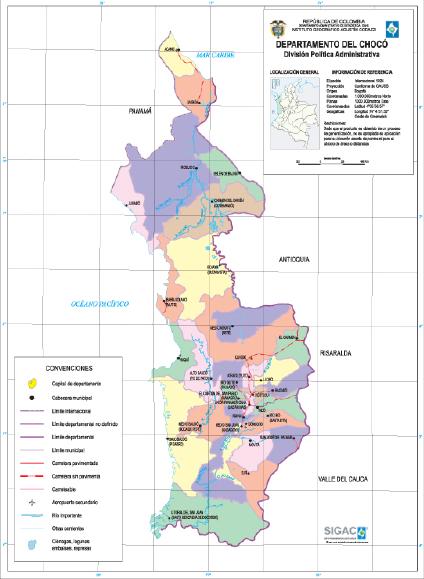
A month ago my 87-year-old Mother Praxedes decided she wanted to return to her home town, a small fishing village called Jurubida, located on the Pacific Coast of the Choco region of Colombia. *The Choco is listed in the Guinness Book of Records as the “wettest region in the world” with more than 40 FEET of rainfall per year. In order to get there we took a flight from the south central mountain valley city of Cali where I live to the northern city of Medellin mere hours from the border of Panama, and from there another flight by small plane to the county seat town of Nuqui on the Pacific coast. Satena Airlines provided a wheel chair for my Mother, due to her age and the fact that she is not able to walk very well.

The 600-plus population fishing village of Jurubida is one hour away from Nuqui by outboard boat. After arriving in Nuqui we took a small wooden launch to Jurubida. One of our neighbors, a man nick-named “Feo”, from the village piloted the launch. We did not have life vests or any safety equipment. At about the half way point of the passage, heavy rains started and we had strong winds and big waves buffeting our tiny craft. In the middle of the storm the outboard motor failed. Feo worked frantically to bail water and get the motor started. Now we were in the ocean trying to bail the water out from the boat to keep us from sinking. We were cold, wet and praying for our lives.

“What am I going to do if the boat sinks”, a Mother asked me. “My daughter can’t swim at all.” The look in her eyes spoke volumes of the terror she felt.

Trying to comfort her I responded, “If that happens, the best thing to do is to hold on to the boat after it turns over.”

I gazed over towards the shore, at least a couple of kilometers distant. I’d try to swim for it if it came to the worst and the sea calmed down some. Both Nuqui and Jurubida were on the coast a mere four to five kilometers or so apart. You could easily see the lights of Nuqui from the beach of Jurubida at night. The launches essentially paralleled the beach a mile or two offshore for most of the trip. You can even walk from the one to the other with the exception of having to cross two rivers emptying into the sea. One river, the Tribuga, is very broad and deep enough to allow even large ocean-going ships to enter its mouth.

Finally the storm ceased, the motor started, we continued and arrived safely.

After being in Jurubida for about three days, the rumors began. The guerrilla were coming that night to kill everybody in town. At 6 pm not one soul was on the street, everybody was locked in their house praying. The few young, inexperienced soldiers who were in town were very nervous. Then they started running around shouting and clapping*, when we heard that noise we thought the shooting had started so my Mother, cousins, nephew and nieces all hid under our beds. Thank God nothing happened that night.

*Note: This is a military tactic designed to disguise the number of combatants. By moving around and clapping, the constant changing of position, sound echoes and reverberations make it nearly impossible to determine the number of soldiers there are.

The very next day I took a boat back to Nuqui trying to catch a cargo boat south to Colombia’s largest Pacific coast seaport city, Buenaventura, because I was already out of money. My Mother stayed in Jurubida. When my relatives in Nuqui found out about my travel plans, they warned my not to take the cargo boat “Luchador” because my life could be in danger since the cargo boat was under threat by extortionists and the guerrilla. It is one of only two cargo boats that regularly make the trip up and down that section of Colombia’s coast. I called my husband and waited until he wired me the money to fly back to Cali. It had been the most “exciting” vacation I have ever had. Still, even though I was now back home, it wasn’t over. Within a couple of days I knew I had contracted “parasites” from the food and water I consumed during my “exciting vacation”. Three days treatment with Zentel and Secnidol and my ordeal was finally ended.

Thank Jehovah God.

Acknowledgement

This story is as was told to me by Doris Lopez in November 2008. I have been to Nuqui and Jurubida several times myself, traveling both by air and cargo boat. The fishing village of Jurubida is accessible only by sea by small motor launch. Nuqui has an airport which handles small passenger aircraft only, during daylight hours. The week following this story, a plane crash occurred there which killed nine of the approximately dozen or so people aboard.


Prof. Larry M. Lynch is an EFL Teacher Trainer, Intellectual Development Specialist, author and speaker. He has written ESP, foreign language learning, English language teaching texts and hundreds of articles used in more than 125 countries worldwide. Get your FREE, pdf format report on CD or via e-mail, "Creative, Dynamic Ways to Motivate and Teach English as a Foreign Language to Diverse Groups of Reluctant Learners" by requesting the title at: lynchlarrym@gmail.com