Showing posts with label piranha. Show all posts

Sunday, January 18, 2009

Piranha: Deadly and Delicious

The Amazon of Colombia is Filled with Danger

The Colombian Amazon is filled with danger. Soldier ants march by the millions devouring all life in their path. Submerged up to the eyes, Crocodiles lie in wait for the unwary – whatever or whoever that may be. Undulating its 20-foot length beneath the surface, the Anaconda, one of the world’s largest snakes, uses heat-seeking guidance to find its next meal. The barbed stinger in the tail of platter-sized stingrays can inflict a wound that takes months to heal. But none of these carry the fearsome mystique of the voracious Piranha, the perfect killing machine.

The Perfect Killing Machine

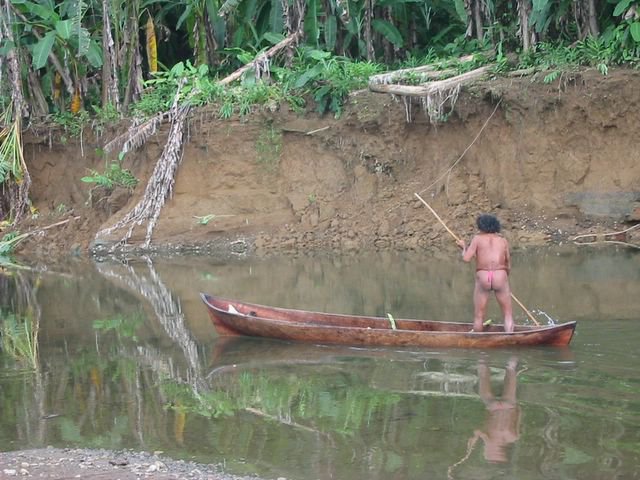
They had it even before we knew what was happening. My rod bowed in prayer to something below the tea-colored water’s surface. The six-pound test line danced like a cat on a hot pavement. All hell had broken loose. Beads of sweat rolled down Doris' back. Her clothes were now a second skin, clinging to her every move. We panted for breath. We had fish on. The silvery oval-shaped body and red belly of a Piranha broke the surface. I reached for it. "Don't let a finger get near their mouths or you'll lose it", our native Noanama Indian guide barked.

Minutes earlier, I shuddered from a breeze escaping from somewhere up ahead despite 90 degree-plus heat. The double-digit humidity didn't help either. A maddening buzz filled my ears, but thanks my coating of Vick's Vapor Rub, the blood-suckers wouldn't feast on me, I hoped. My eyes burned. My nose dripped. A coffee-table-sized leaf or hanging branch slapped into me every few steps. Curses burst from my lips even with my best efforts to "become as one" with the rainforest, as the Noanama had.

Tambaqui and Piraracu

Our fishing rods extended from 18" to five and a half feet. I'd hoped the light mono would suffice, although I'd squirreled away spools of twelve and twenty pound test as an afterthought. If we tagged into a 50-plus pound Tambaqui even that wouldn’t be enough. Don't even think about trying to handle a massive Piraracu that reach the size of a man in Brazil's uncherted Amazon River basin tributaries. Vines as thick as my wrist dipped into light coffee-colored waters making little ripples as it slid past roots and fallen branches. Tangled growth matted the gentle slope of the bank into tea-with-milk colored wetness. I’d flicked a thumbnail-sized chunk of bloody chicken liver on a barb-less hook with a split shot into a dinner plate-sized swirl just beside a snarl of mangrove roots jutting upwards through the surface.

Minutes later, his tanned skin gleaming with moisture, our guide demonstrated the efficiency of the scissor-like teeth. A green leaf held near the gaping mouth instantly sported a neat, crescent-shaped bite. Three heavy blows to the head prepared the killer for cleaning. After cleaning, the Noanama made a series of diagonal cuts along each side of the fish. Into these he carefully rubbed a mixture of salt, garlic, and ground roots from a small gourd he carried. A simple shaved branch frame held the fish over a smoky fire of glowing coals. The firm toasted flesh tasted smooth and a bit earthy, like a seasoned and mellowed catfish. With a wink and a sly nod towards Doris he said. “Make these heads into soup and you will need many wives”. She glanced at me with a puzzled look. I just smiled.

Like a shark

Ranging through South America from Brazil to the lowlands of Peru, they also inhabit waters in Venezuela, Guyana, Colombia, Ecuador and Bolivia. In the Amazon and Rio Negro rivers of Brazil and the Orinoco River in Venezuela, no creature is safe from the Piranha’s razor-sharp teeth and powerful jaws. The serrated teeth fit together like scissors, enabling Piranha to cut the flesh from their prey. Like a shark, a Piranha’s teeth are replaceable, when one breaks off a new one grows in its place.

The Yagua Indians

The Yagua Indians of Peru often use the sharp edges between the teeth of a Piranha jawbone to sharpen the point of their blowgun darts. A fish that is dying or swimming erratically will be quickly attacked by a large school. Piranha will also attack without warning to defend their eggs and territory. A wounded animal that strays into the water will be stripped to the bone so quickly it seems almost to “dance” on the surface as it’s ravaged from beneath. A bird that falls into the water will be gone, feathers and all, in three minutes or less. A trapped fish struggling in a net will be chewed clean to the head in a matter of seconds. Attacks on large animals and humans are often dramatically portrayed, but are rare. In some regions Piranha are known as "donkey castrators".

A President Speaks

"They will rend and devour alive any wounded man or beast.” U.S. President Teddy Roosevelt said, adding, “Piranha are the most ferocious fish in the world." Piranha, also called Caribe or Piraya only furthered their fearsome mystique when Roosevelt encountered them during his exploits in 1914. There are about 35 known species of Piranha but only five species represent a danger to man. Species range from the Red-Belly Piranha (Pygocentrus nattereri) with its characteristic red belly to the largest of the carnivorous species, the Black Piranha with its demon-red eyes and a 17 and a half inch long dark body weighing up to ten pounds. It could remove a man’s hand in two or three bites.

Piranha Head Soup

Most species dine on fruit or seeds that fall into the water from overhanging trees. The fish are not always aggressive. Women wash clothes in knee-deep water where men spearfish while children bathe or swim in these same Piranha-infested waters without harm. Further adding to the Piranha’s mystique, Indian men with half a dozen wives and up to a score of children attribute their potency to Piranha-head soup, although no scientific justification for the soup’s potency exists as yet.

Fishing for Piranha

Piranhas are usually part of indigenous peoples diet in the areas where the fish are found. All you need to go Piranha fishing are lines with a metal leader next to the hook so the fish doesn't bite through the line, a supply of red, raw meat (worms or cut-up fish will do too) and a tiny bit of luck. Piranha swim in large schools and are attracted by both movement and blood. In May of 1999, hundreds of anglers armed with rods, reels, and raw steak flocked to the Brazilian town of Aracatuba near Sao Paolo for a one-Sunday piranha fishing tournament. The townspeople had declared open season on the flesh-eating fish, which had decimated other species in the local river. The prize for the tournament was an outboard motor. But “most fishermen were content to go home with plenty of the reputedly aphrodisiac piranha”, claimed then town spokesman Nelson Custidio.

A Taste You're Sure to Enjoy

Piranha, earning their notorious reputation by reportedly killing 1,200 head of cattle every year in Brazil, are some of the best eating in South America. Whatever name you call them and no matter where you try them, when cooked in a variety of ways, their firm light flesh with its smooth, slightly nutty flavor, is a taste you’re sure to enjoy.


Prof. Larry M. Lynch is an EFL Teacher Trainer, Intellectual Development Specialist, prolific writer, author and public speaker. He has written ESP, foreign language learning, English language teaching texts and hundreds of articles used in more than 100 countries. Get your FREE E-book, "If you Want to Teach English Abroad, Here's What You Need to Know" by requesting the title at: lynchlarrym@gmail.com Need a blogger or copywriter to promote your school, institution, service or business or an experienced writer and vibrant SEO content for your website, blog or newsletter? Then E-mail me for further information.


Sunday, March 16, 2008

Has Anyone Ever Eaten ...These?


Teaching English Abroad: Has Anyone Ever Eaten ...These?

Has Anyone Ever Tried ...

When I asked, “Has anyone ever tried Saino?”; having tasted this species of wild pig called Peccary in English and native to many of the jungles of South America, I did regain a little respect for my “adventuresome” eating. But what brought the house down was my tale of breakfasts in America’s rural south with fried pork brains scrambled with eggs along with fried slices of pig testicles, known as “mountain oysters” in states like South Carolina, Alabama, Mississippi and Georgia. Mouths dropped open and glazed-over eyes seemed to double in size. Then they started talking.

Conversation Practice
One of the language aspects of most interest to your students will be conversation practice. As a native speaker, you represent the best that English has to offer in pronunciation, grammar usage, idioms and expressions, vocabulary, fluency and communicative ability. You are the ultimate example of English in use. But how can you regularly stimulate your students to speak spontaneously without timidity or fear of making mistakes?

The Use of Controversial Questions and Topics
The use of controversial questions and topics can help. In class ask something like: “What’s the most unusual or strangest thing you’ve ever eaten?”

You can then give the answer for yourself first as an example. When I said the strangest thing I’d ever eaten was toasted or fried ants (called “Hormigas Culonas” here in Colombia) the students weren’t impressed. In areas of Mexico, insects like Agave worms (used in tequila), shiny, blue and green iridescent Humiles beetles, and leaf cutter ants and their eggs, are eaten as a matter of course. “I ate flowers once”, I piped up trying to regain some ground. Still no good. Flor de Calabaza, the bright orange flowers of a pumpkin plant, is passé in the areas around Tepoztlan, south of Mexico City. As a matter of fact, they’re delicious sautéed and wrapped in a hot, blue corn tortilla. Did I mention that I frequently dine on the deadly, fear-inspiring, razor-toothed Piranha? But that’s no big deal here.

The Students' Turn
It was the students’ turn and each had stories to tell. And tell them they did. “My aunt likes iguana”, one student blurted out. “Have you tried iguana eggs?, another asked. “Yes, I have”, I smirked. Stories began to flow. Slowly at first, then faster as memories and emotions mounted. Tales of iguana, turtles, caimans (a species of alligator), donkey meat, reptile eggs, armadillo, a Guinea Pig relative called “Cuy” and Dagger fish emerged enthusiastically - bursting with anecdotes, humor and sometimes a bit of disgust. It not only got them speaking fluently, but was quite informative too.

“You can always tell a dagger fisherman”, one Mexican student explained, “because of the strange scars they get from the fish.” “Oh, so how do they get the scars? I meekly asked. The answer made me gasp. Trust me, you don’t want to know. Shark is popular in many Latin and Caribbean countries too.

I wanted to know more and they obliged. They spoke not only of things they’d tried, but of meats and meals they’d heard of others eating. Opinions of what, where and why added richness, depth and flow to the conversation. In the end I had to halt the session which ran well overtime with no indication of ending anytime soon.

They're Cute, Cuddly and Delicious
Oh yeah, I still haven’t tried the “Cow’s Eye soup” in Colombia or the steamy, animal-blood-sprinkled “Yaguarlocro” of Ecuador. But the chicken feet often found in “Sancocho”, Colombia’s national dish, don’t get even the smaller rise out of me anymore. And early last year, I sampled a hearty stew of Three-toed Sloth. They’re cute. They’re cuddly. They’re delicious.

By the way, what’s the strangest, most unique food that YOU have ever eaten?


Prof. Larry M. Lynch is an EFL Teacher Trainer, Intellectual Development Specialist, author and speaker. He has written ESP, foreign language learning, English language teaching texts and hundreds of articles used in more than 80 countries. Get your FREE E-books, “If you Want to Teach English Abroad, Here's What You Need to Know" or "7 Techniques to Motivate Your English Language Learners and Make Your Classes More Dynamic" by requesting the title you want at: lynchlarrym@gmail.com


Monday, November 26, 2007

Part 2 Use These Examples to Create Unique Videos That Generate Massive Website Traffic


In the first part of this two-part article series, we began to discuss creating a video or series of videos in order to promote your business products or services in previous articles. The idea is to produce a unique video or series that will pique interest and drive massive traffic to your website, blog or squeeze pages. Here in part two, we’ll continue that theme and add more online examples for you to consider as well. As before, in each category I’ve tried to include two or three examples for variety of theme illustration. The videos listed are from YouTube.com, with others from the Metacafe.com video posting website.

Photo: T. Kobyashi, world hot-dog-eating champ

Let’s Pick Up With Number Six

6. Gross – Try using key words like awful, disgusting, terrible, insane, horrible, perverted and revolting to associate ideas, concepts and situations to your wares, whatever they may be. Look for unusual records in the Guinness Book of Records as shown in these examples.

Lady Popping Her Eyes Out (Guinness Book of Records)
Link: http://au.youtube.com/watch?v=HX_5zIXxKEU

Watch Da Big Lady Elephant....Her Name Is in the Guinness Book Of World Records
Link: http://au.youtube.com/watch?v=EjQCqRTGRFc

Making Scars with Bubble Gum
Link: http://www.metacafe.com/watch/847434/scars_with_bubblegum/

7. Sexy – I’ve said it before, I’ll say it again, many people may not like it but sex sells. It likely always has, and likely, it always will to some extent. Companies and campaigns from food, politics to clothing, cars, appliances and schools or even power tools continue to use “sexy” ads and commercials. Why? Because they work, that’s why. But sexy videos need not be risqué, distasteful or x-rated. Take a look at these covertly sexy ones for example.

Chinese Girls – Amazing Contortionists
Link: http://au.youtube.com/watch?v=JhL8OncB5CU

Photo Shoot of Riya Sen
Link: http://www.metacafe.com/watch/856501/photo_shoot_riya_sen/

Sexy Korean Commercial
Link: http://au.youtube.com/watch?v=pIRwk6lSIyQ

Sexy Korean Commercial for Lemon Tea
Link: http://au.youtube.com/watch?v=Ivuu3scBE7Q

Korean Girls Photo Sequence – Useful for Commercials
Link: http://au.youtube.com/watch?v=VIRGht3vKzU

Chinese Super Sexy High Quality Song (sung in Chinese)
http://www.youtube.com/watch?v=bZ7Sn65K2Uw

8. Funny - Who doesn’t love humor? If your video can make people laugh or even just smile, you’ve got a winner on your hands. Think of comic, humorous angles related in some way to your service or product.

Beer Portal
Link: http://au.youtube.com/watch?v=m5MK6XElfx4

Funny novelty fishing lures that really catch fish!

Link: http://au.youtube.com/watch?v=KL5F-k64Nr4

Mr. Bean Dancing to an East Indian Song
Link: http://au.youtube.com/watch?v=V_bnAlxRGBg

A Really Funny Sports video clip
Link: http://www.metacafe.com/watch/880759/really_funny/

9. Shocking – Could you associate your products and services with any surprising, stunning, stupendous or stupefying experiences, images or situations?

Giant Anaconda Attacks dog
Link: http://au.youtube.com/watch?v=0XSNlhWCPJk

Hurray for the Bull
Link: http://www.metacafe.com/watch/872395/hurrah_for_the_bull/

The Most Terrifying Bull Ride
Link: http://www.metacafe.com/watch/926978/the_most_terrifying_bullride/

10. Weird - Use words and phrases like odd, strange, dumb, silly, unusual, and unique to start and continue brain storming sessions to come up with possibilities, situations and ideas for your promotional videos.

World's largest Piranha (world record)
Link: http://au.youtube.com/watch?v=zc2NJDqkqPw

Incredible Night Fishing video
Link: http://au.youtube.com/watch?v=cDTKCZur1vM

Weirdest Animals on the Planet
Link: http://www.metacafe.com/watch/813073/weirdest_animals_on_the_planet/

Hopefully, you’ve been inspired enough by these examples to come up with your own original video segment ideas to generate massive traffic to your website or blog or squeeze pages. These examples are but a few of the literally hundreds of thousands of videos available online. YouTube.com alone has more than one million vides at the time of this writing. Look around at others. You can Google search additional video websites to generate as much input and as many unique ideas as you can. Soon you too will be producing your own personalized videos to build your niche marketing lists and online profits.


Larry M. Lynch is an English language teaching and learning expert author and university professor in Cali, Colombia. Now YOU too can live your dreams in paradise, find romance, high adventure and get paid while travelling for free. View my YouTube video playlist at: http://au.youtube.com/view_play_list?p=B156E95F69660E9E Do you need professional, original content and photos or images for your blog, newsletter, e-zine or website? Want more information, have a comment or special request? E-mail the author for a prompt response at: lynchlarrym@gmail.com .

Saturday, September 29, 2007

The 9 Best World Travel Destinations for English Teachers

The 9 Best

When the publishers of the Lonely Planet travel guides issued their annual list of the best travel destinations for this year there were a few surprises. Gone were some of the over-priced, over-crowded tourist traps of previous years. There are some new entries to peak the curiosity and provide ever-expanding new vistas and experiences for the crowd-weary world traveler and English as a foreign language teachers.

Here’s a partial list in reverse order.

9. Germany An old favorite that still can pull its weight with the tourism crowd and one of only two European entries that made the list, Germany has much to offer. More than just Oktoberfest, beer and sausages, travelers can delight in specialties from each of the country’s regions.

8. Colombia A stunning surprise entry on the list for the first time, Colombia may be know for its drug-trafficking and civil war violence, but it’s also the world’s leading producer of fine emeralds. It’s the world’s second leading producer of coffee after Brazil, but the quality of the rich, mild coffee produced here is second to none. One of South America’s most beautiful countries, scenic delights range from still-active volcanoes like the smoldering Galeras to the bubbling mud spews of Totumo near Colombia’s Atlantic coast.

photo: A Rhinocerous Beetle from the tropical rain forests of Colombia

7. India Mythical, mysterious, enchanting and a hundred more adjectives besides, how could this wondrous place not be on anyone’s wish list of travel destinations? A large percentage, up to 75%, of the population living in large cities speaks at least passable English. I’m surprised it’s only number eight. But it is on the list and deservedly so. Food, festivals, culture and history pour into the streets at every turn

6. Canada June, July and August are peak tourism months for the USA’s giant Northern neighbor. English is the language of all Canada’s provinces with French being the language of choice in the province of Quebec. There are marvelous winter festivals in Quebec City and francophone Montreal to delight the senses for willing to brave the frigid minus forty and below temperatures. There’s plenty to keep you warm though.

5. Antarctica Not only know as “that frozen continent at the bottom of the world”, Antarctica is now featured in a number of commercials and travel ads. But with temperatures ranging from degrees F to degrees F, “What’s the attraction?” you might ask. More than you might imagine. There’s not exactly a shortage of wildlife despite daytime temps in the minus teens on a “warm” day. Marine life is also abundant as are formations of ice and snow on the glaciers that the continent feeds. Wanna play with the penguins, anyone? The experience of being there itself is a unique, one-of-a-kind adventure that draws many. Stormy Cape Horn and the beauty of wind swept Patagonia are also near. Scientific expeditions from a number of countries are nearly always in progress. At times the place is not unlike Grand Central Station. Antarctica is certainly not for everyone, but it does have its charms.

4. Mexico Long a favorite destination of North Americans from the USA and Canada, what’s not to like about this country famous for hot chili peppers and even hotter senoritas? From the beach to bullfights, you can find nearly any form of diversion you like. Skiing in Mexico? You betcha. Mt. Orizaba, North America’s second highest peak is south of the border.

3. Nicaragua With a stable economy and rock-bottom real estate bargains, this country has caught the eye of investors and ex-pats looking for scenic locales and tranquility. Once torn by civil strife, conditions have reversed and improved to the point it’s now a tourism destination for in the know and savvy on Central American affairs.

2. China With one billion, three hundred million inhabitants, the world’s most populous country has awakened from its “sleeping giant” image to thrust its presence onto the world scene with a vengeance. Authentic Chinese food, not that “cloned” stuff you get at the chain franchises, awaits you in a variety and abundance that must be experienced to be believed. The Chinese eat and drink things that will absolutely amaze and astound you – and they make it look good too. From the world renowned Great Wall, the only man-made structure visible from outer space, to vast stretches of seemingly as yet unexplored country, even the Chinese are still turning up discoveries and treasures in their own midst.

1. Argentina It takes two to Tango as they say. If you want to try your hand at Argentina’s national pastime, here’s definitely the place. For meat lovers this is paradise as the beef here is among the best in the world and certainly the best in South America. The beef here is not only great, but there’s plenty of it and it’s cheap by U.S. and European standards. Gauchos, as Argentine cowboys are called, still abound on the grassy pampas and plains that comprise most of the country. There are tours, “tenderfoot” home stays at ranches and plenty of open spaces for a roundup of experiences that’ll leave you wanting more. Be sure to wash down all that succulent tender roast beef with locally produced wines that are surprisingly good at even more surprisingly affordable prices.

So there you have it, the top ten travel destinations from the Lonely Planet publishers. Where would you like to go this year? Forget the “old favorites” temporarily. Step out; try something new and different for a change.


Fish for Piranha in the Amazon region of Colombia, or Bull sharks off its Pacific coast. Explore China’s historical, cultural and epicurean delights. Oomph, Pah, Pah your way through Germany’s scores of different sausages and hundreds of varieties of malted brews. Carve an original ice sculpture in Quebec City, laughing at the record cold temperatures all the way. Fish or canoe one of Canada’s unspoiled lakes with water so pure you can drink it.

Whichever direction the wind blows you, you’re bound to enjoy experiences and sights to last a lifetime.


Prof. Larry M. Lynch is an English language teaching and learning expert author and university professor in Cali, Colombia. Now YOU too can live your dreams in paradise, find romance, high adventure and get paid while travelling for free. For more information on entering or advancing in the fascinating field of teaching English as a Foreign or Second Language send for his no-cost pdf Ebook, “If You Want to Teach English Abroad, Here’s What You Need to Know”, by sending an e-mail with "free ELT Ebook" in the subject line. For comments, questions, requests, to receive more information or to be added to his free TESOL articles and teaching materials mailing list, e-mail: lynchlarrym@gmail.com

Wednesday, September 19, 2007

They Eat What! Latin America's Most Exotic Foods - Part 2

They Eat WHAT!

If you’re teaching English as a foreign language abroad, you can expect changes in foods ranging from the simple to the outrageous as we noted in yesterday's part 1 of this series.

So you’re back for more, huh? Well if I didn’t get to you in part one with “treats” from Colombia, Brazil and Mexico you’re gonna just love what you’ll get here in part two of this three-part series. We’re going to travel into the jungles of Colombia and up into the high Andes mountain range in Ecuador to introduce you to some “Eye-opening”, high-flying specialties that’ll make partly-cooked greasy pork liver seem like “Haute Cuisine”. Hungry yet? Tighten up your belts then and let’s continue our culinary tour.

Three-Toed Sloth
Called “Oso Perezoso” (lazy bear) in Spanish, these dense-haired, slow moving creatures live off of jungle foliage and leaves. You would think they’d be easy to catch, but in fact, they can live high up in the trees and be extremely difficult to spot. Cleaning and preparing to cook one takes several hours. Most of time being spent just to remove the coarse, dense hair which is done by dipping the carcass in boiling water and painstakingly scraping or pulling the hair off. The result is worth it though as it has the most delicious meat I’ve ever tasted when cooked in a thick, rich stew. Sloths are kept as pets since they’re actually quite harmless despite having up to four-inch long claws.
In the Cartagena photo above, English as a foreign language teacher Geny Vidal, from the southern Colombia city of Popayan, cuddles someone else’s pet sloth.

Bofe

Pronounced “bow-fay”, the dried, roasted lungs of a cow are this snack food. Often available at airport restaurants and street food vendors in Colombia, it’s a somewhat acquired taste, but not one that’s unpleasant by any means. Most people simply have to get past the thought of what it is (believe me; you DON’T want to see it before it’s cooked). It’s difficult and time-consuming to prepare. Ready to eat, it’s a dark, unappetizing looking concoction cut into bite-sized cubes for easy munching.

Vulture
Yup, you read right – Buzzard, is eaten in some towns in the Central Highlands of Ecuador. It’s caught, plucked and thoroughly cleaned (I wouldn’t want THAT job!). The high Andes mountain range runs from Colombia south through to Chile and is home to vast flocks of Condors. Condors are carrion-eating birds. I don’t have to tell you what “carrion” is, do I? The cleaned, prepared bird is normally prepared in soup with seasonings, broth and vegetables like yucca, potato, plantain, celery and carrots.

Cow’s Eye
Ever wonder what happens to the “unwanted” parts of food animals like the reproductive organs? Well in Latin countries, these parts are eaten same as the rest of the animal. Consisting mostly of liquid, cow’s eye is sold fresh, of course. It’s most frequently cooked by being stirred into a hot pot of chocolate and served as a drink or a thick “soup” of sorts. Although it’s relatively common and popular in Colombia, I haven’t taken the plunge yet. Several of my acquaintances say the concoction’s quite tasty.

How would YOU like to try it?

In part one of this three-part series, we traveled through Brazil, Colombia and Mexico to sample ants, piranha and green iguana. In part two you were introduced to sloth, vulture and cow’s eye and lungs. In the final part of this series you’ll meet more exotic foods. From the Pacific coast to the mountain highlands of the Peruvian Andes we’re going to rock you with even more “treats” of Latin America you’ll never forget. Brace yourself for this one. It’s definitely NOT for pansies.
If you’d like to get part three of this series “They Eat What! Latin America’s Most Exotic Foods”, please e-mail me at: lynchlarrym@gmail.com . I’ll be waiting.

Bon Appetit!

Prof. Larry M. Lynch is an English language teaching and learning expert author and university professor in Cali, Colombia. Now YOU too can live your dreams in paradise, find romance, high adventure and get paid while travelling for free. For more information on entering or advancing in the fascinating field of teaching English as a Foreign or Second Language send for his no-cost pdf Ebook, “If You Want to Teach English Abroad, Here’s What You Need to Know”, by sending an e-mail with "free ELT Ebook" in the subject line. For comments, questions, requests, to receive more information or to be added to his free TESOL articles and teaching materials mailing list, e-mail: lynchlarrym@gmail.com

Tuesday, September 18, 2007

They Eat What! Colombia’s Most Exotic Foods Part 1

They eat WHAT!

They’re horrid, ghastly, gross, unthinkable, gut-wrenching, wonderful, savory and delicious. These are but a few of the adjectives used to describe commonly eaten fare “south of the border” from Mexico to Peru. The expression, “One man’s meat is another man’s poison” has never seen more fruition than evidenced in these “exotic” foods found throughout Latin America. Just feast your eyes on these typical taste-tempting treats from Colombia.

Iguana

Starting off our list is a common delicacy from the Pacific Coast of Colombia and Caribbean. Although protected in many countries, these green lizards, which can grow to more than 3 feet in length, are a prized stable in Aruba, Bonaire, Panama and Colombia. The eggs are also cooked and eaten even though they’re often taken illegally. A sizeable black market for them exists in Cartagena, on the Caribbean coast of Colombia. They’re not cheap, but they are good.

And yes, little Kenya Lopez' family ATE the Green Iguana she's holding in the above photo!

Armadillo

From Texas to Ecuador, these nine-banded creatures have been coveted for decades. Their numbers are now greatly diminished due to years of heavy hunting; they’re still considered a delightful treat when they can be found. Usually cooked in stews to help tenderize their thick, dense meat, almost everyone who has eaten Armadillo really likes them. You’ve got to be fast to catch them though. They can burrow into the soil at alarming speeds.

Ants

Technically known as “Hormigas Culonas”, these swollen abdomen ant species are a highly-prized food commodity in Colombia and Mexico. They’re gathered from seemingly innocuous places like cemeteries, parks and untended pastures, then roasted or fried until crisp. Only the enlarged abdomen is consumed, often with cheese or honey as an “aperitif”. Sold and exported by the pound, they’ve quickly become an international favorite among the insect-eating crowd.

To b honest, I like them myself.

Piranha

Despite numerous movies to the contrary, they don’t always attack without mercy. Children in Brazil, Colombia, Venezuela, Ecuador, Guyana and Peru swim in Piranha-infested waters all the time without injury. Women are also known to do the family laundry in streams and pools teeming with razor-toothed schools of them. Many of the 35 known varies of Piranha, including the Cachama family, are not only edible, but delicious. Piranha head soup is used as a form of “jungle Viagra”. Tales abound of elderly Indian men with more than a dozen children and multiple wives.

Well if I didn’t get to you here in part one with “treats” from Colombia, Brazil and Mexico you’re gonna just love what you’ll get in part two of this three-part series. We’re going to travel into the jungles of Colombia and up into the high Andes mountain range in Ecuador to introduce you to some “Eye-opening”, high-flying specialties that’ll make partly-cooked greasy pork liver seem like “Haute Cuisine”.

See you in part two of “They Eat What! Colombia’s Most Exotic Foods”.

Bon Appetit!


Prof. Larry M. Lynch is an English language teaching and learning expert author and university professor in Cali, Colombia. Now YOU too can live your dreams in paradise, find romance, high adventure and get paid while travelling for free. For more information on entering or advancing in the fascinating field of teaching English as a Foreign or Second Language send for his no-cost pdf Ebook, “If You Want to Teach English Abroad, Here’s What You Need to Know”, by sending an e-mail with "free ELT Ebook" in the subject line. For comments, questions, requests, to receive more information or to be added to his free TESOL articles and teaching materials mailing list, e-mail: lynchlarrym@gmail.com